
How to choose the right contraceptive pill?

How to choose the right contraceptive pill?
Learn the pros and cons of different types of birth control pills.
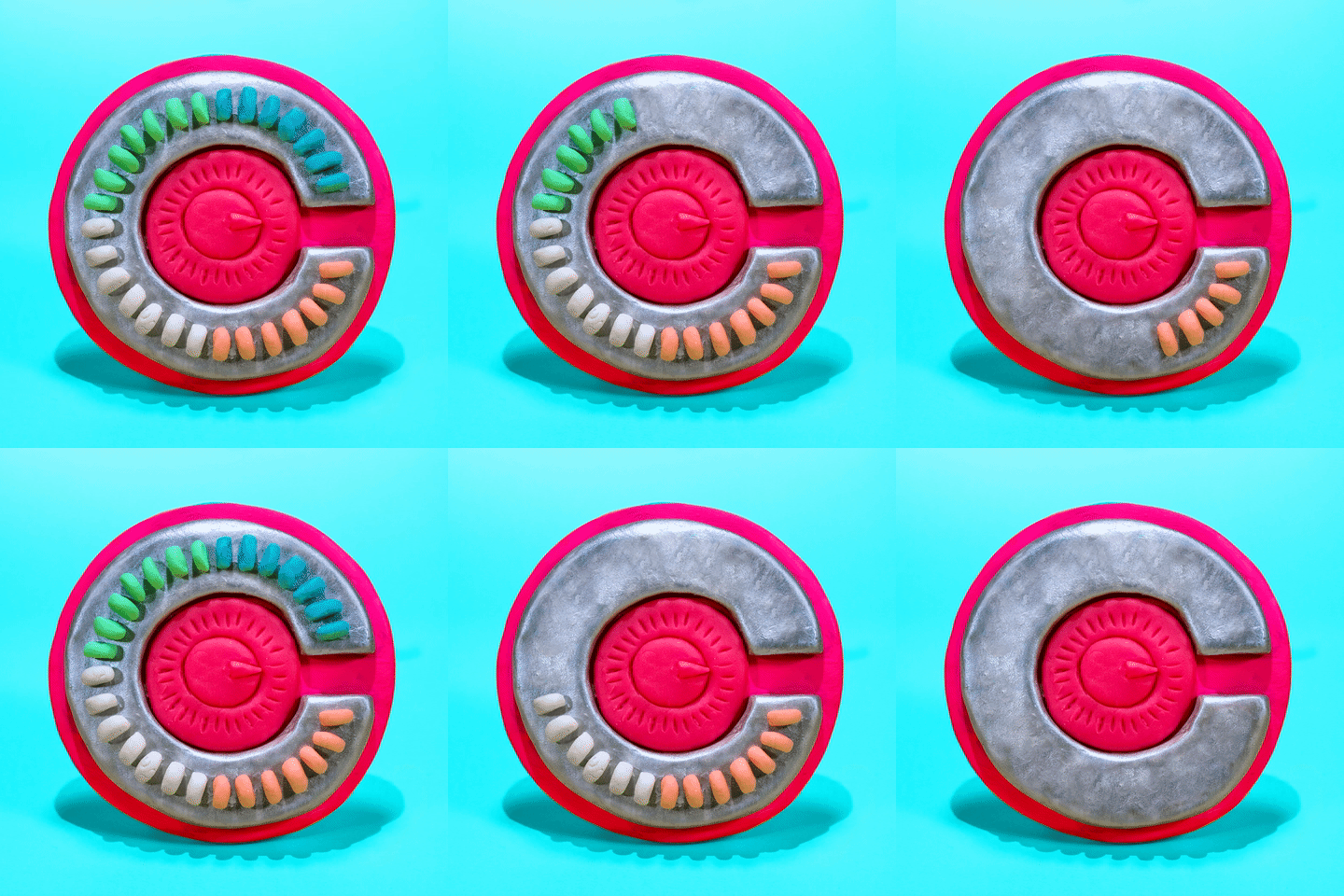
If you're thinking about taking birth control pills, you're not alone. Birth control pills are one of the most popular forms of contraception for very good reasons - they are effective and easy to use. However, the large number of pills from different manufacturers on the market can lead to confusion. Fortunately, they can be sorted into just a few categories to make it easier for you to evaluate your options.
What are the types of contraceptive pills?
There are two main types of pills - the combined contraceptive pill, which contains estrogen and progestin, and the minipill, which contains only progestin.
Combined contraceptive pills have different numbers of active and inactive pills.
A pack of conventional pills usually contains 21 active pills and seven inactive pills or 24 active pills and four inactive pills. Menstruation occurs every month when you take inactive pills.
Combined contraceptive pills are also categorized according to whether the hormone dose stays the same or varies:
Monophasic: each active pill contains the same amount of estrogen and progestin.
Multiphasic: the amount of hormones in active pills varies.
Combined contraceptive pills that contain less than 35 mcg of ethinyl estradiol are known as low-dose pills, and 20 mcg are known as ultra-low-dose pills. Women who are sensitive to hormones may benefit from taking the pill with a lower dose. However, using the low-dose pill may result in more breakthrough bleeding - bleeding between periods - than the higher-dose pill.
Minipil doesn't offer that many choices. There is one mix and formulation, and all tablets in each package are active.
How do different birth control pills work?
Combined contraceptive pills do not allow ovulation - no egg is released.
The minipill thickens the mucus of the cervix and thins the endometrium - preventing the sperm from reaching the egg. Unlike combined pills, the minipill does not contain estrogen. The dose of progestin in the minipill is also lower than the dose of progestin in any combined oral contraceptive pill.
Are all types of birth control pills suitable for everyone?
No. Your gynecologist will take your medical history and ask about all the medicines you use in order to choose the pills that are suitable for you personally..
What are the advantages and disadvantages of tablet combinations?
Advantages
Reduced risk of ovarian and endometrial cancer
Improved acne problems
Less painful periods
Reduced androgen levels caused by polycystic ovary syndrome
Reduced heavy bleeding
Reduced PMS symptoms
Shorter, lighter and more predictable periods
Avoidance of pregnancy risk
Flaws
No protection against sexually transmitted infections, including HIV.
Increased risk of heart attack and stroke.
Increased risk of blood clots.
Side effects such as irregular bleeding, bloating, breast tenderness, nausea, depression and headaches.
What is the conclusion?
You have many birth control options. If you decide to take birth control pills, talk to your doctor to decide which type of birth control is best for you.
Comprehensive approach
Confidential evaluations, advanced screening, and tailored treatment plans designed specifically for your well-being.
Specialist-led care
Your healthcare is overseen by continuously verified, highly experienced clinicians guiding you step by step.
Fast, clear insights
Receive clear results promptly along with customized next steps and straightforward guidance on your health.